
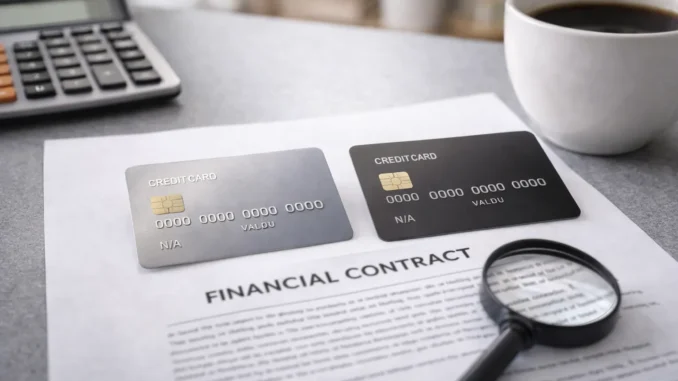
You are standing at the checkout of a major New Zealand electronics or furniture retailer, staring at a $3,000 price tag. The salesperson smiles and says, “You can take it home today completely interest-free for 12 months.” It sounds like free money. But whether they slide a Gem Visa or a Q Mastercard across the counter, you are about to sign up for one of the most expensive financial products in the country.
Store cards like the Gem Visa (backed by Latitude Financial) and the Q Mastercard (backed by Consumer Finance Limited) dominate the retail space in NZ. They lure shoppers in with long, interest-free promotional periods on big-ticket items.
However, these companies do not offer “interest-free” terms out of generosity. Their entire business model relies on a psychological trap: they know that a large percentage of consumers will fail to pay off the balance before the promotional period ends. When that clock strikes midnight, your remaining balance is hit with a devastating revert interest rate that is significantly higher than a standard bank credit card.
Before you find yourself needing a debt consolidation loan just to pay off a new TV, you need to understand the fine print. In this ruthless 2026 comparison, we put the Gem Visa and Q Mastercard head-to-head. We will expose the hidden establishment fees, the ongoing account charges, and ultimately reveal which piece of plastic is the bigger threat to your financial health.
The True Cost: Gem Visa vs. Q Mastercard (2026 Comparison)
Both the Gem Visa and the Q Mastercard operate on the exact same premise: they offer 6, 12, or even 60 months of “interest-free” finance on specific store purchases. However, “interest-free” does not mean “free of charge.”
Let’s strip away the marketing jargon and look at the brutal mathematical reality of holding either of these cards in your wallet in 2026.
| The Catch (Hidden Costs) | Gem Visa | Q Mastercard |
|---|---|---|
| The “Revert” Interest Rate | 29.49% p.a. | 28.95% p.a. |
| Establishment Fee (New Customers) | $55.00 | $50.00 |
| Annual Account Fee | $55.00 ($27.50 billed half-yearly) | $50.00 ($25.00 billed half-yearly) |
| Late Payment Fee | $15.00 | $15.00 |
The “Establishment Fee” Illusion
Imagine you buy a $500 washing machine on a 12-month interest-free deal. You think you are beating the system. However, if you open a new Gem Visa at the checkout to get this deal, you are immediately hit with a $55 Establishment Fee and the first half of your $55 Annual Fee.
Before you even walk out of the store, your $500 washing machine has effectively cost you $582.50. That is an immediate 16.5% markup on your purchase disguised as “administration costs.”
⚠️ The Minimum Payment Trap
This is the exact mechanism that traps Kiwis in debt. Your monthly statement will ask for a “Minimum Amount Due” (usually around 3% of your balance). If you only pay this minimum amount, you will NEVER pay off your purchase before the interest-free period ends. When the promo expires, your remaining balance gets slammed with that brutal ~29% interest rate, instantly destroying any savings you thought you made.
Which is the Bigger Trap? The Verdict
Strictly by the numbers, the Gem Visa is slightly more expensive to maintain. It carries a marginally higher revert interest rate (29.49% vs. Q Mastercard’s 28.95%) and its establishment and annual fees are $5 higher across the board.
However, the “bigger trap” depends entirely on your discipline. If you use these cards like regular credit cards for everyday spending (groceries, petrol), they are both equally devastating. Standard bank credit cards in NZ charge between 12% to 20% interest. Carrying a balance on a Gem or Q card at nearly 30% is financial suicide.
Final Verdict: The House Always Wins
Retailers and finance companies do not offer long-term interest-free deals out of charity. They offer them because they know human nature. They know that life happens, budgets slip, and a large percentage of customers will fail to clear the balance before the promotional period ends, trapping them in a cycle of 29% interest debt.
Your Action Plan for 2026: If you currently have a balance on a Gem Visa or Q Mastercard that is about to lose its interest-free status, do not panic, but do act quickly. Do not settle for paying the minimum amount. Your best escape route is to move that high-interest debt to a 0% balance transfer credit card or use a much lower-rate debt consolidation loan to freeze the interest.
Pay it off, call the provider to officially cancel the card, and never look back.
Frequently Asked Questions
Can I transfer my Gem Visa or Q Mastercard balance to a normal bank?
Yes, absolutely. Most major New Zealand banks (such as ANZ, Westpac, and BNZ) allow you to transfer store card debt to their standard credit cards. They often offer promotional rates like 0% p.a. on the transferred balance for 6 to 12 months, giving you breathing room to pay off the principal.
How do I officially cancel my Gem Visa or Q Mastercard in NZ?
You cannot usually cancel these cards in-store at the retailer where you signed up. You must call their respective customer service hotlines directly (Latitude Financial for Gem Visa, or Consumer Finance Limited for Q Mastercard) and request a formal account closure once your balance is zero.
Is it bad for my credit score if I cancel my store card?
No. In New Zealand, closing high-interest credit lines like store cards actually improves your credit profile. It reduces your total potential debt exposure, making you a much safer borrower in the eyes of banks and mortgage lenders.




Be the first to comment