
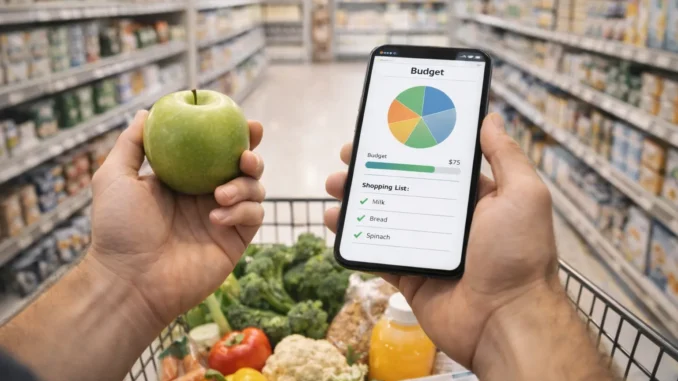
If you have ever walked up to a supermarket checkout in New Zealand with just two bags of groceries and felt your jaw drop when the total flashed on the screen, you are not alone.
For most Kiwi families, the weekly supermarket run is the second-largest household expense right after rent or the mortgage. Operating in a market heavily dominated by a duopoly, New Zealanders face some of the highest grocery prices in the developed world. Relying on “specials” that aren’t actually discounted is no longer enough to survive the ongoing cost of living crisis.
To truly protect your income, you need to stop shopping on autopilot. You need to know definitively which supermarket chain mathematically offers the lowest baseline prices, and you must learn the psychological tricks retailers use to make you impulse-buy expensive, high-margin products.
In this ruthless grocery survival guide, we rank the cheapest supermarkets in NZ for 2026, expose the “unit pricing” secrets hidden on the shelves, and give you the exact hacks you need to slash your weekly food bill by up to 30%—without sacrificing nutrition.
The Verdict: Which Supermarket is Actually Cheapest in NZ?
In the battle of the NZ supermarket giants, there is a clear winner for baseline affordability. Independent consumer price surveys consistently rank Pak’nSave as the cheapest option for a standard trolley of weekly essentials, largely due to their no-frills, warehouse-style business model.
However, the “cheapest” option can depend on how you shop. Below is a realistic breakdown of the big three players in 2026:
| Supermarket Chain | Price Point Strategy | Best For… |
|---|---|---|
| Pak’nSave | Lowest everyday baseline prices. Fewer “specials” but consistently cheaper staples. | Doing the bulk monthly “big shop” to stock up the pantry. |
| Woolworths (formerly Countdown) | Higher baseline prices but aggressive weekly “specials” and “Onecard” rewards. | Cherry-picking specific loss-leader specials and online delivery convenience. |
| New World | Premium pricing focused on customer service, store presentation, and gourmet items. | Top-up shops, premium ingredients, and a pleasant shopping experience. |
The “Unit Price” Secret: Ignore the Big Red Sticker
Supermarkets are masters of illusion. They will place a large, colourful “SALE” sticker on a product to make you think it is a bargain, when in reality, a larger pack size right next to it is cheaper by weight.
The only price that matters is the tiny print usually found in the bottom corner of the shelf label: the price per 100g or per kilogram. This is the “Unit Price,” and it is the only way to accurately compare value across different brands and pack sizes.
💡 The Cheese Block Hack: Always check the unit price on cheese. A 700g block on “special” for $12.00 ($1.71 per 100g) is often more expensive than a standard 1kg block priced at $16.00 ($1.60 per 100g). Don’t let the lower sticker price fool you.
Beware the “Eye-Level is Buy-Level” Trap
Supermarket shelves are rented real estate. Brands pay premium fees to be placed directly at your eye level because that is where you are most likely to grab an item on autopilot.
To find the best deals, you literally need to look down. The budget-friendly home brands (like Pams, Value, or Essentials) are almost always placed on the bottom shelves. They often contain the exact same ingredients as the premium brands above them but cost 30% to 40% less because they don’t have marketing budgets.
The Power of “Click & Collect” to Kill Impulse Buying
Supermarkets are designed as dopamine mazes. The smell of the bakery at the entrance, the essential milk and bread placed at the far back corners—it is all engineered to make you walk past thousands of tempting items you didn’t come in for.
The ultimate hack to survive the cost of living crisis is to stop entering the store entirely. Switch to online shopping (Click & Collect is usually free over a certain spend). When you shop online, you stick rigidly to your list, you see a running total of your cart, and you are completely immune to the end-of-aisle impulse displays.
Final Verdict: Stop Shopping on Autopilot
Beating the high cost of groceries in New Zealand requires a shift in mindset. Supermarkets are designed to extract as much money from you as possible by exploiting convenience and impulse. By switching your main shop to Pak’nSave, utilizing Click & Collect, and religiously checking the “Unit Price,” you take the power back.
Your Action Plan for 2026: Before you do your next grocery run, sit down and write a rigid meal plan based on what you already have in your pantry and what is genuinely on special that week. Stick to the list, shop the bottom shelves for home brands, and do not fall for the “Eye-Level” traps.
Now that you have optimized your weekly food budget, it is time to tackle your monthly utility bills. Continue your cost-of-living fightback by reading our step-by-step guide on how to compare and switch power companies in NZ to instantly save hundreds of dollars a year.
Frequently Asked Questions
Why are groceries so incredibly expensive in New Zealand?
New Zealand’s high grocery prices are driven by three main factors: a lack of supermarket competition (a market duopoly), geographic isolation that increases import freight costs, and a small population spread over a large area, making logistics expensive.
Are supermarket loyalty cards (like Everyday Rewards or New World Clubcard) worth it?
Yes, but with a warning. You should absolutely scan them to unlock the exclusive “member-only” pricing on the shelves. However, do not let the pursuit of points dictate what you buy. The points earned rarely outweigh the cost of buying an expensive, non-essential item just for a bonus.
Does Pak’nSave offer online delivery in NZ?
Unlike Woolworths and New World, Pak’nSave generally does not offer home delivery to keep their operational costs low. However, most stores now offer a highly efficient “Click & Collect” service, which is a fantastic way to stick to your budget and avoid in-store impulse buys.
What is the cheapest day of the week to buy groceries in NZ?
There is no single “cheapest” day, but timing matters. Woolworths (Countdown) typically rolls over their new weekly specials on a Monday. Shopping on Monday or Tuesday ensures you get first access to the best discounted stock before it sells out.



Be the first to comment