
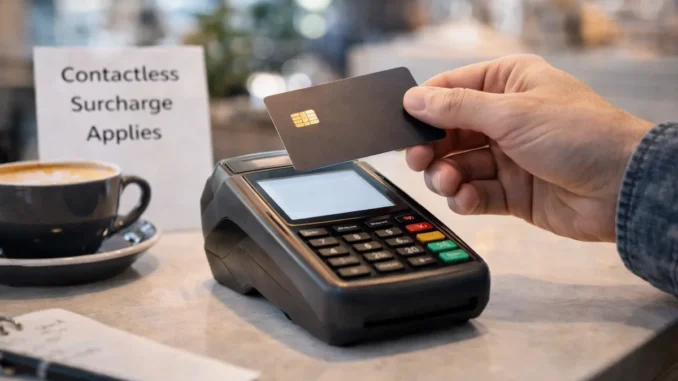
Are Paywave and credit card surcharges legal in NZ? Yes. Businesses in New Zealand can legally charge a surcharge when you pay with a credit card or use contactless payments (Paywave). However, under Commerce Commission rules, this surcharge must only cover the actual cost the business pays to process the transaction (typically between 1% and 2.5%). It is illegal for a business to use payment surcharges to make a profit.
The convenience of “Tap and Go” has entirely transformed how New Zealanders shop. Whether you are grabbing a quick morning flat white, buying groceries, or filling up your car, tapping your smartphone or card is practically an unconscious habit. But that convenience comes with a hidden, accumulating cost.
Many Kiwis are growing increasingly frustrated by the small 1.5% or 2% fees silently tacked onto their daily purchases. While a 10-cent fee on a cup of coffee might seem insignificant, these micro-charges can easily drain hundreds of dollars from your household budget over the course of a year.
Unlike the 15% public holiday surcharges designed to cover mandatory staff wage increases, retail payment surcharges are strictly regulated to cover banking technology fees. In this 2026 consumer guide, we explain exactly why these fees exist, how to easily avoid them, and what to do if a retailer is illegally overcharging you at the checkout.
Why Does “Tap and Go” Cost You Extra?
When you tap your smartphone, smartwatch, or contactless card against a payment terminal, that transaction is not processed by your local bank’s standard system. Instead, it is routed through major international credit card networks like Visa or Mastercard. These global networks charge the retailer a merchant service fee for processing the transaction quickly and securely.
Because profit margins in the New Zealand retail and hospitality sectors are notoriously tight, many businesses simply cannot afford to absorb these network fees. Consequently, they pass this exact cost directly onto you, the consumer, in the form of a contactless or credit card surcharge.
EFTPOS vs. Contactless: The Golden Rule of Free Payments
The most important financial habit you can build to avoid these daily micro-charges is understanding the difference between the international credit network and the domestic New Zealand EFTPOS network.
If you use a standard debit card, you can entirely bypass the contactless payment fee nz retailers charge. How? By physically inserting your card into the machine and entering your PIN. When you insert or swipe your card and select “CHQ” or “SAV”, the transaction is routed through New Zealand’s domestic EFTPOS system. This domestic network is heavily regulated and essentially free for businesses to use, meaning they cannot legally charge you a surcharge for this payment method.
💡 Pro Tip: Stop Tapping Your Phone
Apple Pay and Google Pay always route your payment through the Visa or Mastercard network, even if they are linked directly to your everyday debit account. If you tap your phone, you will almost always be hit with the surcharge. To save money, keep your physical debit card in your wallet and insert it using your PIN.
How Much Can a Business Legally Surcharge?
The Commerce Commission is very strict regarding eftpos surcharge rules. A business is only legally allowed to surcharge you the actual cost they incur to process the payment. They are absolutely prohibited from using payment surcharges to generate extra profit.
For most standard credit cards and Paywave transactions, this fee should sit reasonably between 1% and 2.5%. If a standard retail shop or cafe is charging a flat 5% or 10% fee just for tapping your card, they are likely in direct breach of the Commerce Commission guidelines and the Fair Trading Act.
Final Verdict: Look Before You Tap
The convenience of contactless payments comes at a literal cost. While businesses have a legal right under the Fair Trading Act to pass on the exact fees they are charged by Visa, Mastercard, or Paywave, they absolutely cannot use this mechanism as a sneaky way to boost their profit margins.
Your Action Plan for 2026: Break the habit of blindly tapping your smartphone or credit card. Always look closely at the EFTPOS terminal screen before you pay. If the total is suddenly higher than the advertised menu price, look for a surcharge warning sign. If the surcharge seems completely unreasonable (for example, a flat $1 fee on a $5 coffee is a 20% surcharge, which is illegal), physically insert your debit card and select “CHQ” or “SAV” to bypass the fee entirely using the free domestic EFTPOS network. If the business refuses to let you insert your card or forces an exorbitant fee, report them directly to the Commerce Commission.
Frequently Asked Questions About Payment Surcharges
How can I completely avoid the Paywave or credit card fee?
The easiest way to completely avoid the fee is to carry a physical EFTPOS or debit card, insert it or swipe it at the terminal, select your account (CHQ or SAV), and enter your PIN. This routes the payment through the domestic New Zealand network, which is generally free for retailers.
Is a flat 50-cent surcharge legal on a small purchase?
Usually, no. The Commerce Commission explicitly states that surcharges must only cover the actual cost of processing the payment (typically around 1% to 2.5%). A flat 50-cent fee on a $4 coffee equates to a 12.5% surcharge, which heavily exceeds the actual banking cost and is illegal.
Where do I report a New Zealand business for illegal surcharges?
If you encounter a business charging excessive payment fees (e.g., above 3%) or failing to clearly display a surcharge warning sign before you pay, you should lodge an official complaint online through the New Zealand Commerce Commission website.

Be the first to comment