
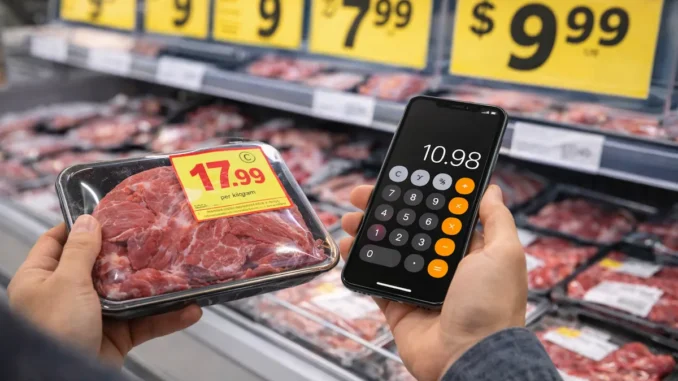
Are Pak’nSave Meat Weeks actually cheaper? Yes, but only if you strictly compare the “per kilogram” unit price against their standard weekly rates. While the per-kilogram price is often discounted by 10% to 15% during a Meat Week promotion, the supermarket forces you to buy massive bulk packs. This psychological tactic often causes shoppers to spend more money at the checkout than they originally planned.
In New Zealand, the bright yellow and black “Meat Week” signs trigger a severe case of FOMO (Fear Of Missing Out). When grocery inflation is squeezing every last dollar out of the average household budget, the promise of cheap mince, chicken breast, and roasting joints is impossible to ignore.
Shoppers flood the aisles and fill their trolleys with giant family-sized trays, convinced they are beating the system. But the supermarket business model is not built on handing out free money. Behind those massive fluorescent stickers is a carefully calculated pricing strategy designed to increase your overall basket size.
Before you clear out your chest freezer for the next big sale, you need to understand the difference between a genuine bargain and a volume trap. In this 2026 analysis, we build on our ultimate guide to saving money at NZ supermarkets by exposing the unit-pricing reality of bulk meat sales, and how to outsmart the retailer at their own game.
The “Unit Price” Illusion
The fundamental trick of any bulk meat sale is shifting your focus away from the price per kilogram and towards the sheer size of the package. During a Meat Week, you might see a massive family pack of chicken breasts with a bright yellow sticker proudly displaying “$25.00”.
If your weekly grocery budget only allocated $12 for chicken, buying the $25 pack instantly blows your budget for that shopping trip. Even if the unit price has dropped from $13.99/kg to $10.99/kg, the supermarket has successfully convinced you to spend more than double your intended amount today. You are saving on the margin, but you are losing on your total weekly cash flow.
💡 The Calculator Rule: Never look at the final sticker price on a bulk meat pack. Always look at the small print indicating the price per 100g or per 1kg. Compare this specific number to the regular price you pay. If the difference is less than 10%, it is not worth destroying your weekly budget to buy in bulk.
The Freezer Fallacy
The justification for buying 3 kilograms of beef mince is always the same: “I will just freeze it.” While freezing meat is a perfectly valid storage method, human behavior often dictates a different outcome.
If you do not portion that bulk meat into airtight, meal-sized bags immediately upon returning home, it often ends up thrown into the freezer in its original supermarket packaging. Fast forward three months, and that meat is covered in freezer burn and eventually thrown into the bin. The moment you throw away 500 grams of spoiled meat, any “savings” you made during Meat Week are completely wiped out.
Quality vs. Quantity: The Mince Debate
Another common tactic during major meat sales is heavily discounting the lowest-tier products. For example, standard beef mince (often carrying a high fat and water content) will see a massive price drop to lure shoppers into the store.
When you cook high-fat mince, a significant percentage of the weight renders down into liquid fat and water that you simply drain away down the sink. You might have paid a low price per kilogram at the checkout, but your cost per kilogram of actual cooked, edible meat is much higher than you think. Premium lean mince might cost more upfront, but it yields far more usable food.
| The Trap | What You Think | The Retail Reality |
|---|---|---|
| Bulk Pack Pricing | “I am saving $5 on this giant tray!” | You spent $30 instead of the $15 you budgeted, increasing store revenue. |
| Freezer Storage | “It will last me for months.” | Improper freezing leads to food waste, destroying the initial discount. |
| High-Fat Discounts | “This standard mince is incredibly cheap per kg.” | You are paying for excess water and fat that shrinks away during cooking. |
Final Verdict: Stick to Your List, Not Their Sale
Pak’nSave Meat Weeks are not inherently a scam. If you have a massive chest freezer, a large family, and the discipline to portion and freeze everything correctly the moment you get home, you can genuinely shave 10% to 15% off your long-term meat budget.
However, for the average household, these sales are a psychological trap designed to increase your immediate checkout spend. Buying $50 worth of discounted chicken when you only needed $15 worth today destroys your weekly cash flow and increases the risk of expensive food waste.
Your Action Plan for 2026: The next time you see those giant yellow signs, ignore the hype. Write down exactly what meals you are cooking for the next seven days, calculate how much meat you actually need, and only buy that amount—even if the smaller tray costs a few cents more per kilogram. True savings come from buying only what you consume, not hoarding what is temporarily cheap.
Frequently Asked Questions About Bulk Meat Sales
Does the quality of meat drop during a Pak’nSave Meat Week?
No, the actual quality of the standard cuts remains the same. Supermarkets simply order massive volumes from their suppliers at a negotiated discount to run the promotion. However, they will heavily promote cheaper, fattier cuts (like standard mince or sausages) over premium lean cuts to maintain their profit margins.
How often do NZ supermarkets run bulk meat sales?
Major promotions like Meat Weeks typically run cyclically, often every two to three months, strategically timed around pay cycles or public holidays to maximize consumer spending when budgets might feel slightly looser.
Should I freeze bulk meat in its original supermarket packaging?
No. Supermarket packaging traps air inside the plastic tray. If you throw the entire tray into the freezer, the air will cause severe freezer burn, ruining the texture and taste of the meat. You must re-package bulk meat into airtight freezer bags or vacuum-sealed pouches before freezing.




Be the first to comment